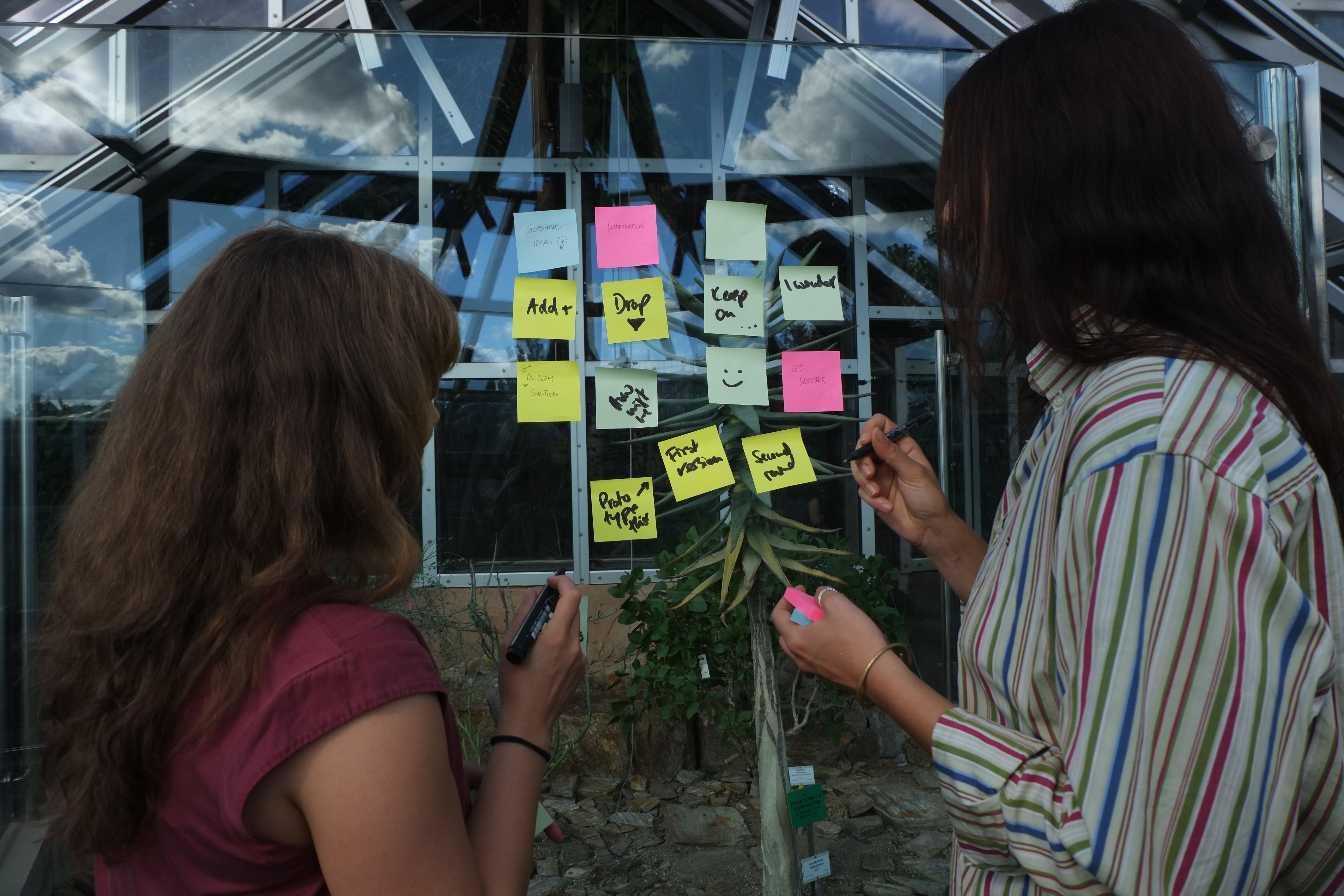
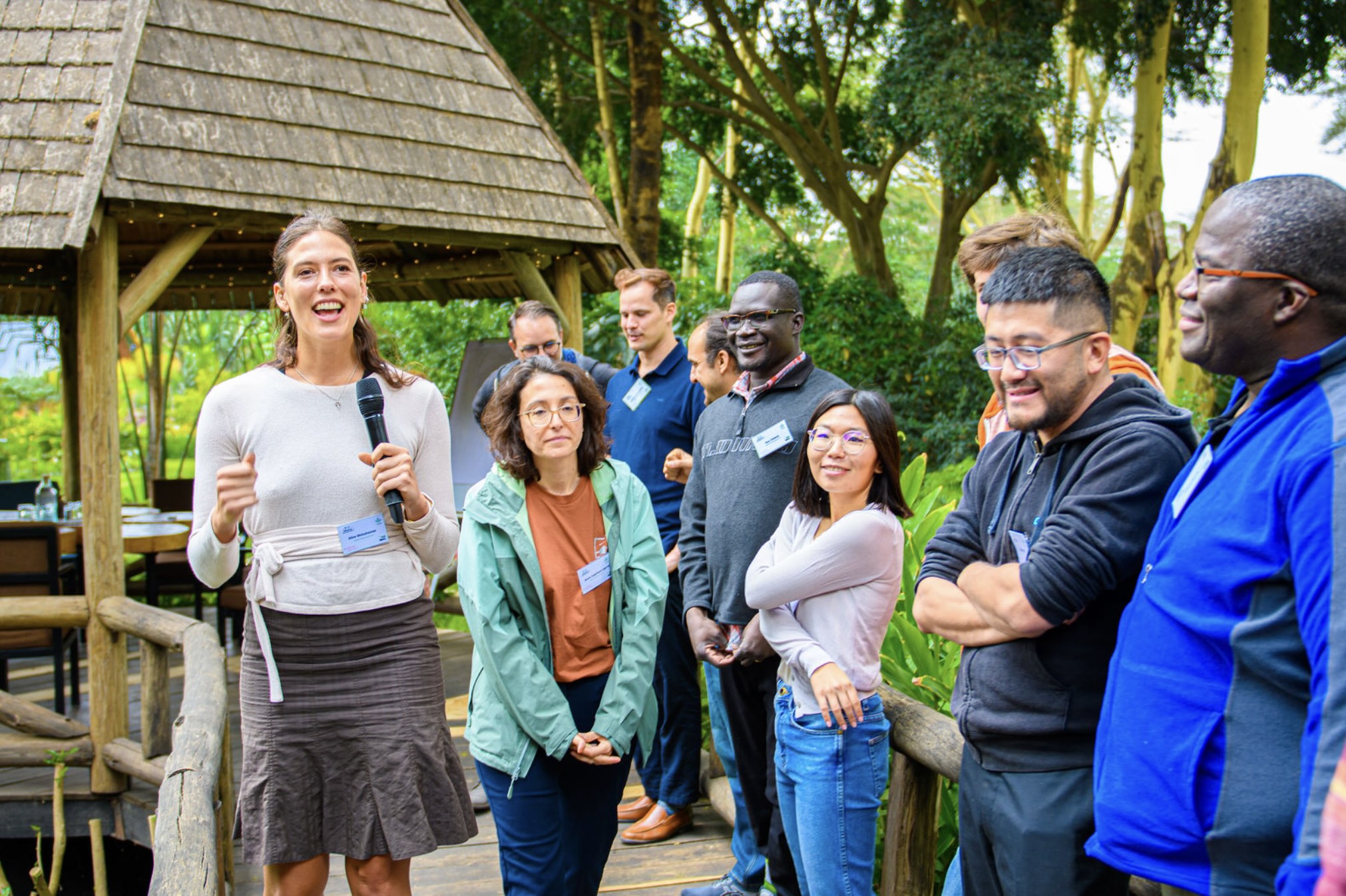





We are a young, female-led user research and design agency applying Human-Centered Design to help sustainable innovation thrive. Our team combines backgrounds in academic research, business management, human-centered design and international development.
Glashaus is a space to bring together people and disciplines and co-create meaningful innovation for problems of the 21st century. Located in Berlin, operating globally: we support teams in English, French, German and Portuguese. Places we've worked include Geneva in Switzerland, Arusha in Tanzania and Rio de Janeiro in Brazil - with international organisations, research institutions and NGOs tackling development and sustainability challenges.
Founded in 2025, we're a growing team of UX design experts - building a network of like-minded designers, innovators, researchers and builders. We bring methods from the fields of research, design and strategy, working with partners around the world to identify the right expertise and experience, work locally, and connect people for long-lasting relationships.
A very old, complex question the whole industry keeps racking its brains over. Here's our non-confrontational attempt to answer it:
Innovation is a new way of looking at problems - and the solutions that emerge from it. It's by no means limited to the digital or technological sphere. A new storage system can be as innovative as the latest chatbot. Innovation design draws on different perspectives and disciplines to examine problems in new ways and develop solutions that evolve and grow, becoming more effective and creative over time.
Think of innovation as the breeding ground from which solutions emerge. It is not the solution itself.
There are a lot of concepts and terms out there (it’s confusing - we know).
Our core approach is making the process of solving urgent problems more focused on actual needs - of humans, of the surrounding systems (economic, ecological), and of the infrastructure that supports them.
So when we say we apply Human-Centered Design, that means we're loyal to the Double Diamond when it comes to developing innovation: start from a well-defined problem, explore it from every angle, narrow down to the most promising solutions, prototype fast, many times, test, fail, and refine. This is Design Thinking in practice: curious, empathetic, willing to prototype before you're certain.
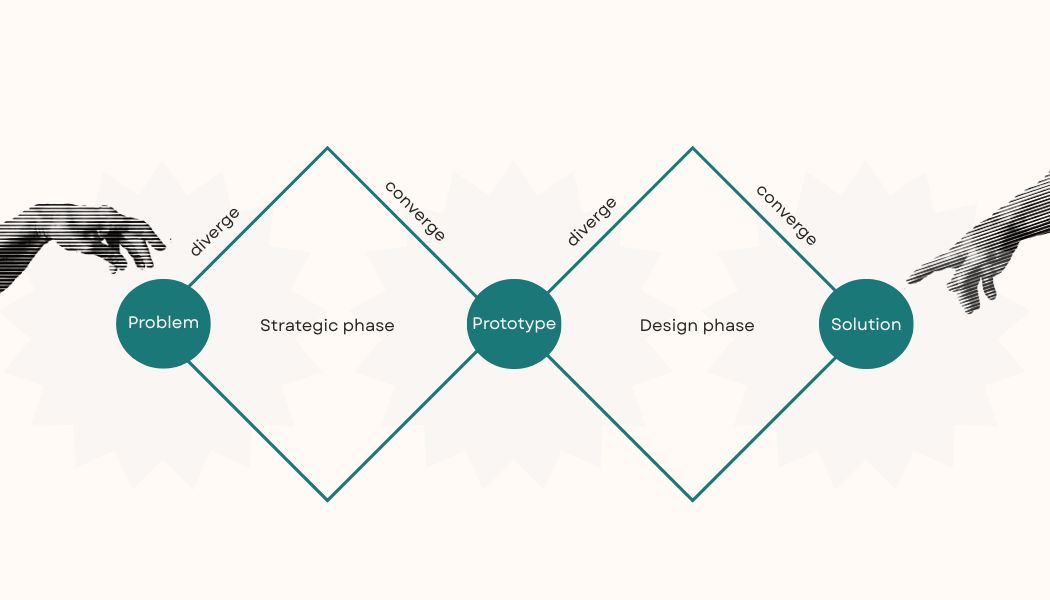
Human-Centered Design has grown steadily since the 1960s. That growth now demands expansion: the field has to account for ecological systems and planetary boundaries too. So wherever it's needed, we bring in System Thinking, Behaviour Change and other neighbouring disciplines to grasp the full picture.
At Glashaus, we apply this wide, visioning perspective just as much as we work hands-on shaping the interaction and interfaces of your products and services. Any great idea only succeeds if the people using it have a positive, pleasant experience. That's the art of UX - we analyze and design each step of your users' experience, bringing their needs and context into the development process, using personas, journeys and mappings to show where your users are and what they need.
That experience also includes the digital touchpoints your users encounter along the way. This is where User Interface Design comes in: we design interfaces that fold seamlessly into that experience, making things easier, not harder, following usability heuristics to keep them accessible and inclusive by design. And if an interface already exists, we come in with a fresh perspective - analyzing it to spot risks and opportunities, and co-designing improvements.
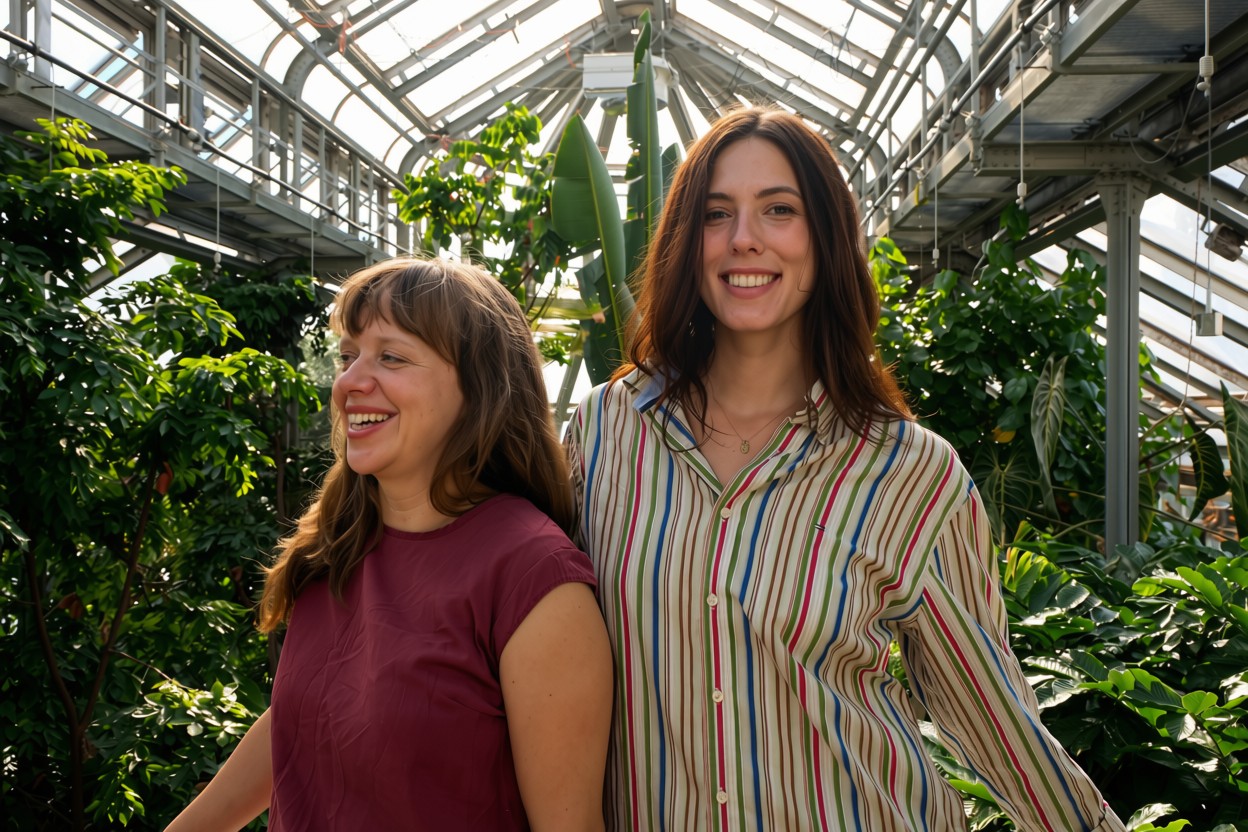
We work together with all types of organizations and team structures in the research and international development sector. In the past, we have helped institutions and companies developing solutions for inclusive digitization, sustainable agriculture, storytelling. Yet, whatever you are working on can be subject of collaboration.
Because design can be found everywhere and our approach can be universally applied. Whether it is a product, a service, an internal process. You bring your problem, we discuss where you are stuck and match you with the right methods to finding solutions. Check out our work and read through our case studies to learn more.
There's no standard timeline, no minimum procedure, and no prior knowledge needed to get started. We usually begin with a scoping call: you bring your problem and questions, and we jointly decide on a way forward. From there, we put together a proposal - including a working plan and budget. We scale engagements from short diagnostic sprints to multi-year programmes, so there's room to start small or go deep.
What we ask from you is a willingness to work iteratively and stay problem-focused. We're ambitious about outcomes, not about tearing things down - we work with your systems and constraints, not against them, tailoring our intervention to your project's timelines and delivery schedule. We usually work with your entire team, building capacity that outlasts a single project.
A note on North-South collaborations: Glashaus is based in the Global North, and we're aware of the limits this places on designing and deploying solutions in the Global South. That's why we work with local partner organisations and experts there - teaming up on fieldwork, data collection, local context, and technical deployment.
We often meet teams that have already started: needs analyses, baseline studies, surveys. That's great - and a strong point to build from.
What we bring is a systematic approach to being user-centered. Design artefacts that are actually usable by you and your team, not just for one project. Monitoring systems that keep surfacing user needs and experience signals long after we're gone. And a new way of working: developing truly user-centered innovations only happens in a mature organisational culture, using muscles we help you and your team build. We install this through workshops, embedded facilitation, and co-design sessions with your team - often, that's easier to get going with externals bringing in new practices and sparking the discussion.
Return on investment for Human-Centered Design can be measured in two ways.
First, in improved performance indicators. When our team redesigned a nutrition survey for IITA in Rwanda, the results showed up clearly in the data: the overall start-to-completion rate rose from 58% to 70% — with an even lower starting point for women. Data quality also improved significantly, measured in fewer deviant responses. These are hard numbers you can use to justify the investment.
Second, in what you avoid. Some industry-wide findings worth knowing:
- 70% of digital innovations fail simply due to lack of adoption.
- Fixing issues after launch typically costs 10x more in time and resources than fixing them at an early stage.
- 85% of early-stage product issues can be caught by testing with just 5 users.
What we deliver at the end of an engagement is either clear, actionable recommendations with a realistic roadmap, or tested prototypes with indicators to track. Either way, our aim is practical results you can use straight away — and keep working with effectively on your own, even six months down the line.
Check our portfolio for concrete examples across our four fields of work:
User Research
Innovation Design
Strategy Consulting
Workshops and Trainings
Visit our offer page to see the range of scope we work with. We don't have standardised packages - we tailor every offer to your needs. Cost depends on scope, from a short, focused sprint to a multi-year partnership. Tell us your problem and constraints, and we'll come back with options that fit.
This is a very common starting point! Reach out with exactly that message, and we'll help you figure out where to start - together. We'll start with a short scoping call, so there's no need to have it all figured out beforehand.
It helps to bring along any insights you already have, so we're not reinventing the wheel - but you don't need prior experience or expertise in Human-Centered Design to get started.
Send us an email any time, and check our portfolio to see if you recognise your own situation in our past work.